
Cards for mental wellbeing · Posted anywhere in the UK

You've got this. Are you OK? Or are you just OK(ish)?

Most cards pretend it's fine. Ours ask. Ok(ish) cards are written by people who've lived with mental ill health, grounded in real research, and posted first class to someone who needs more than a platitude.

  • Written by people who've been there
  • The research on the back of every card
  • From £4.50, UK postage included

Why we exist

One in four
of us.

In the UK, one in four of us face mental ill health every day. Today's cards say "you've got this" and pretend it's fine. It's not — and in 2026, that's unacceptable.

We make cards for that one. And for the three who love them and don't know what to say. — the reason Ok(ish) exists

Three face down, one face up. Nobody knows which of the four it is this week. That's rather the point.

How it works

Like Moonpig. Minus the pretending.

Pick the card that says the true thing, add your words (or borrow ours), and we'll post it. Three steps, one doormat.

  1. 1Pick

    Choose the card that says the true thing

    Browse by what they're going through, not by occasion. Low days, seasonal slumps, too much screen and not enough sky — or just checking in, because you've been meaning to.

  2. 2Write

    Add your words — or borrow ours

    Stuck for what to say? Every card comes with an inside note written by someone with lived experience. Edit it, sign it, or leave it exactly as it is.

  3. 3Post

    We post it, first class

    Printed on thick recycled card, in a plain envelope, straight to their door — or to yours, if you'd rather hand it over. From £4.50, UK postage included.

The range

Say the true thing.

Nature, daylight, people — the things that genuinely help, on a card that doesn't pretend. Every one is a small prescription you can post.

Hover or tap a card to read the inside.

Card front: a blue duotone bridge with blossom. Text reads: Are you OK? Or are you just OKish?
Checking in£4.50

Inside

It's a real question, not a greeting. "Fine" is allowed to be the answer. So is "not really". I'll take either — and I'll still be here for the next one.

The research: most of us say "fine" the first time we're asked. Time to Change found it takes asking twice before people tell the truth.

One small thing: answer honestly. Even if the answer is "ish".
£4.50
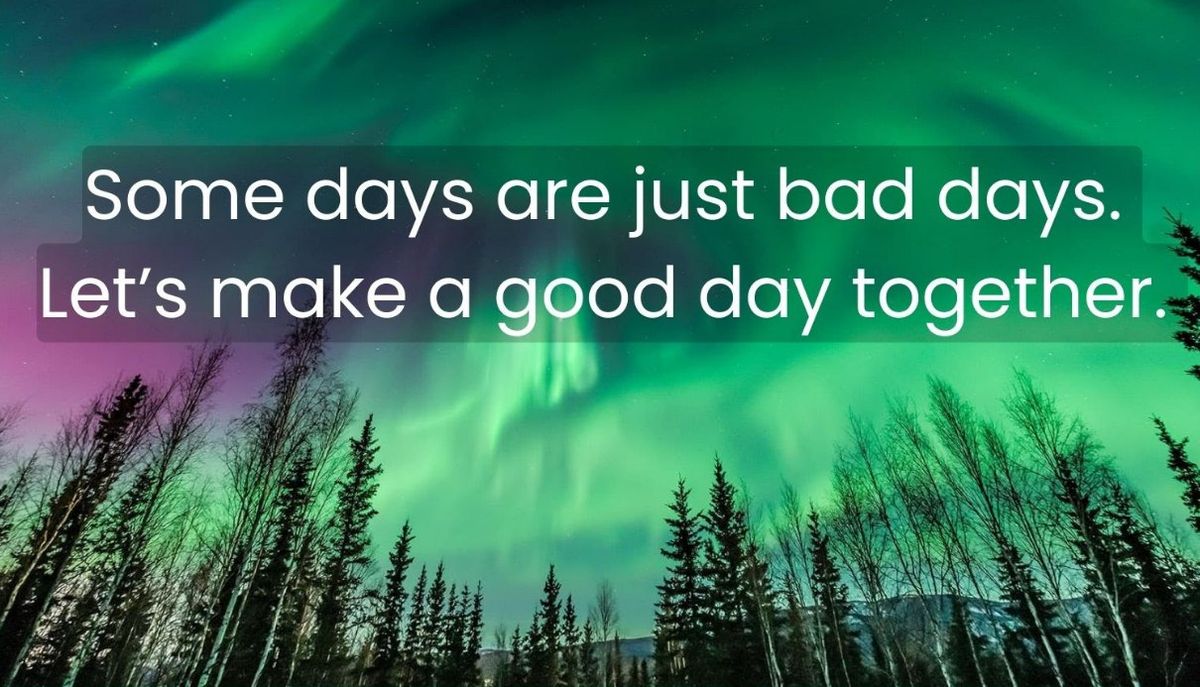
Card front: northern lights over a forest. Text reads: Some days are just bad days. Let's make a good day together.
Low days£4.50

Inside

Not every day is a good day, and pretending otherwise is exhausting. Bad days are allowed. Let's just get through this one together — and see what tomorrow brings.

The research: letting a low mood be there, rather than forcing positivity, is linked to better wellbeing over time. Acceptance beats performance.

One small thing: pick one small good thing for today. Tea counts. I'll bring it.

£4.50
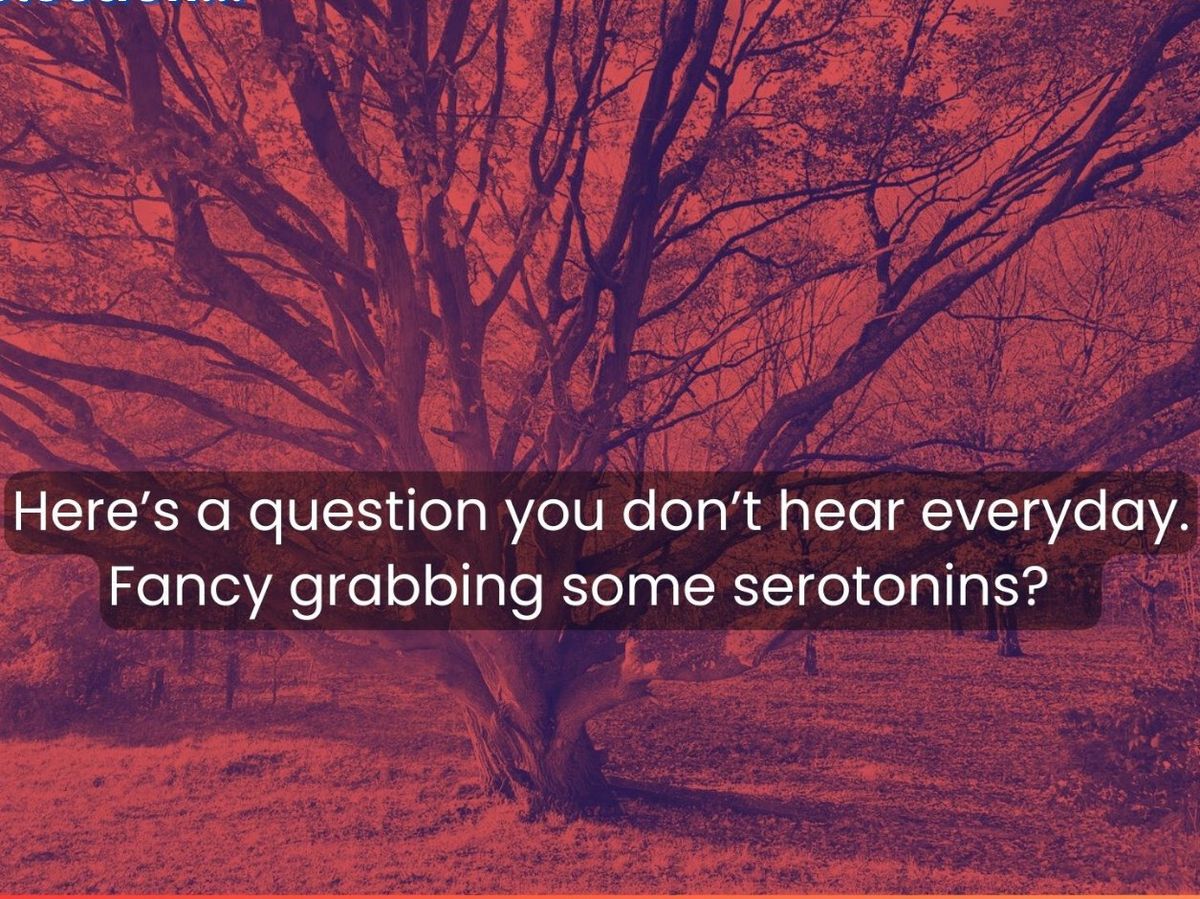
Card front: a red duotone oak tree. Text reads: Here's a question you don't hear everyday. Fancy grabbing some serotonins?
Get outside£4.50

Inside

Serotonin is the brain's steadying chemical, and your body makes more of it when you move and when daylight hits your eyes. So: a walk. Outside. With me, if you like.

The research: daylight exposure and moderate exercise both raise serotonin activity — two of the best-evidenced mood levers there are.

One small thing: ten minutes outside before noon.

£4.50
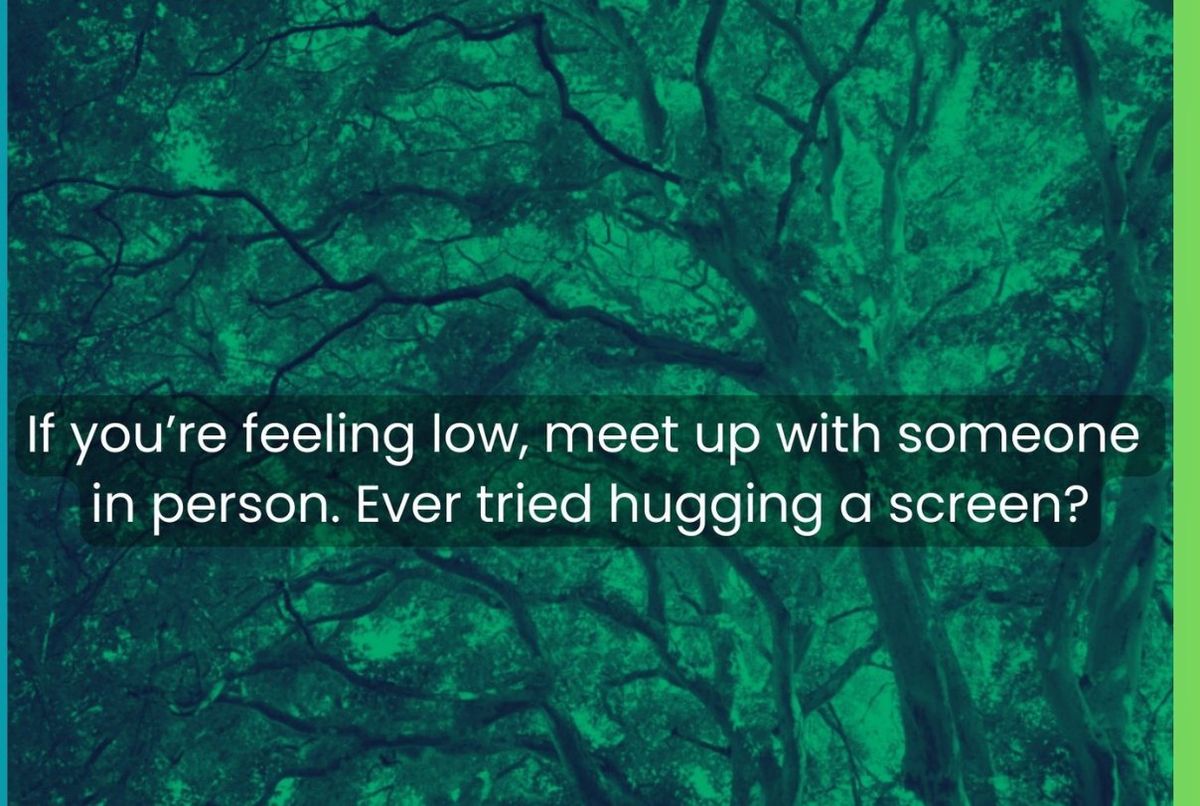
Card front: green duotone branches. Text reads: If you're feeling low, meet up with someone in person. Ever tried hugging a screen?
People£4.50

Inside

Screens are brilliant at everything except this. When you're low you need a face, a voice, a cup of tea and a hug that isn't an emoji. Name a day. I'll come to you.

The research: face-to-face contact protects against depression far more than phone or online contact does (Teo et al., 2015).

One small thing: text me a day this week. The day, not a reason.

£4.50
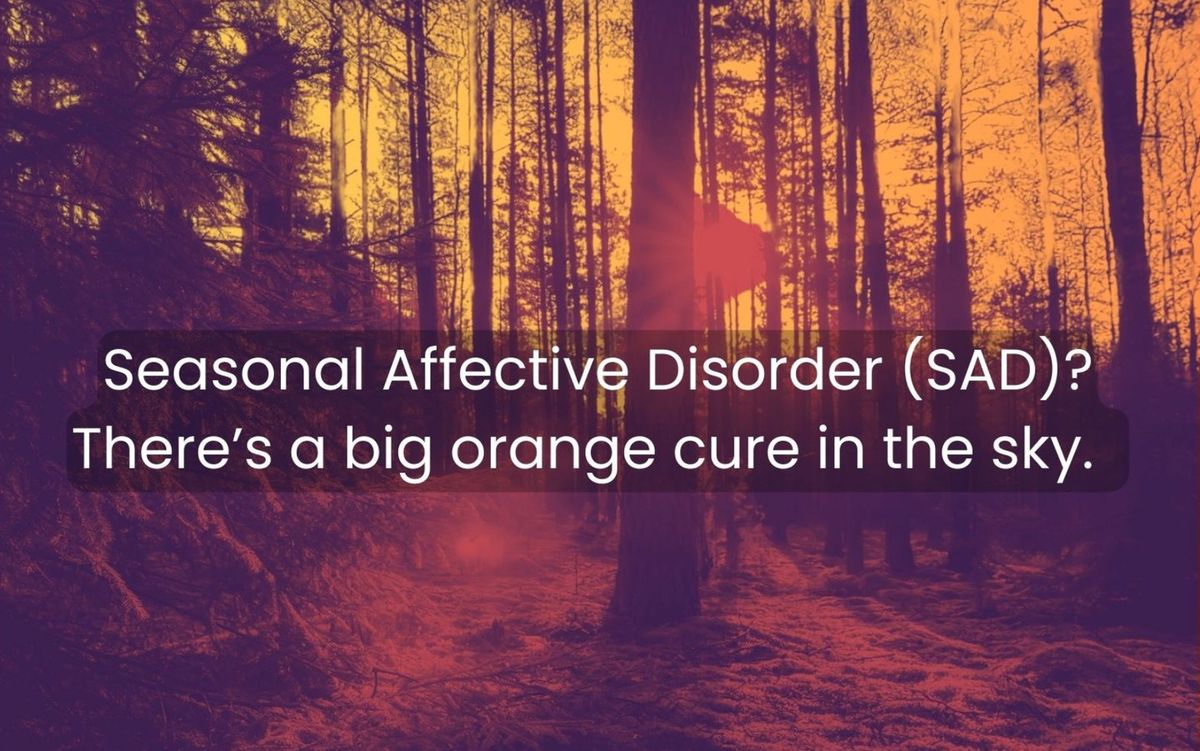
Card front: orange duotone forest at sunset. Text reads: Seasonal Affective Disorder (SAD)? There's a big orange cure in the sky.
Daylight£4.50

Inside

Shorter days really do drag some of us down. It has a name, and it isn't weakness. The cure is embarrassingly simple: get your face in the daylight, especially in the morning.

The research: SAD is recognised in NHS guidance; morning daylight and light therapy are the first things it recommends.

One small thing: curtains open before coffee. Ten minutes of morning light.

£4.50
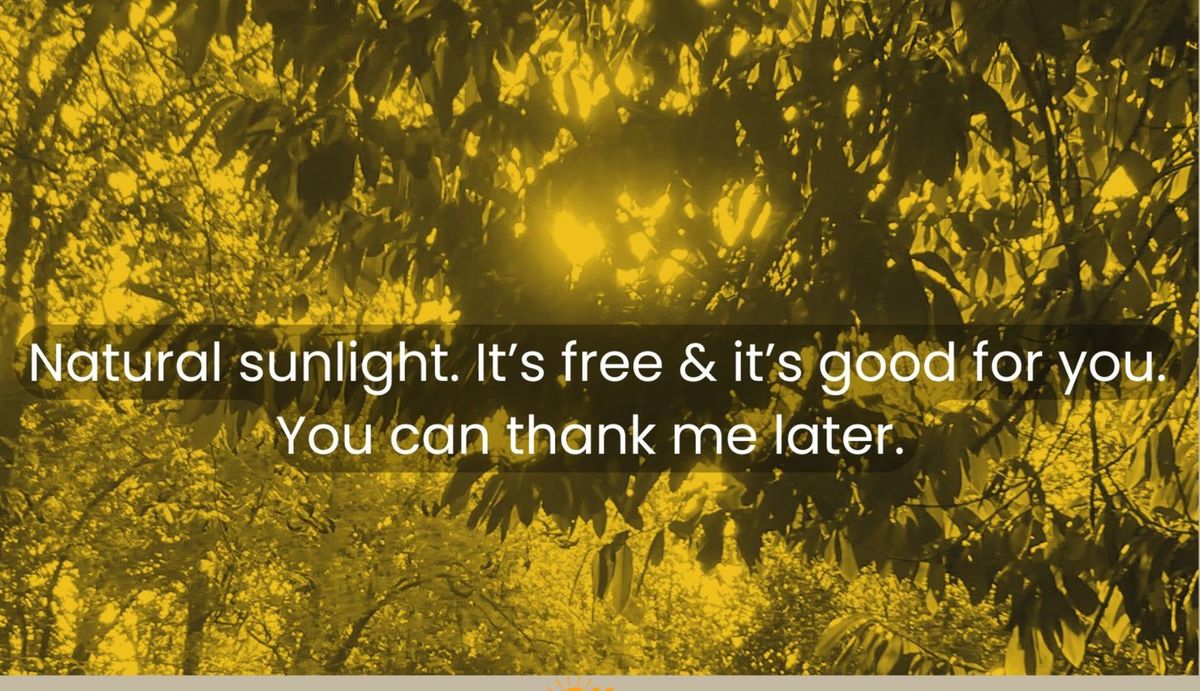
Card front: yellow duotone leaves in sunlight. Text reads: Natural sunlight. It's free & it's good for you. You can thank me later.
Daylight£4.50

Inside

No prescription, no queue, no side effects worth mentioning. Sunlight helps your body make vitamin D and keeps your sleep clock honest. Go and get some. You can thank me later.

The research: daylight anchors your body clock and your mood — even an overcast British sky is many times brighter than any room indoors.

One small thing: eat lunch outside. Coat on, if it's Britain.

£4.50
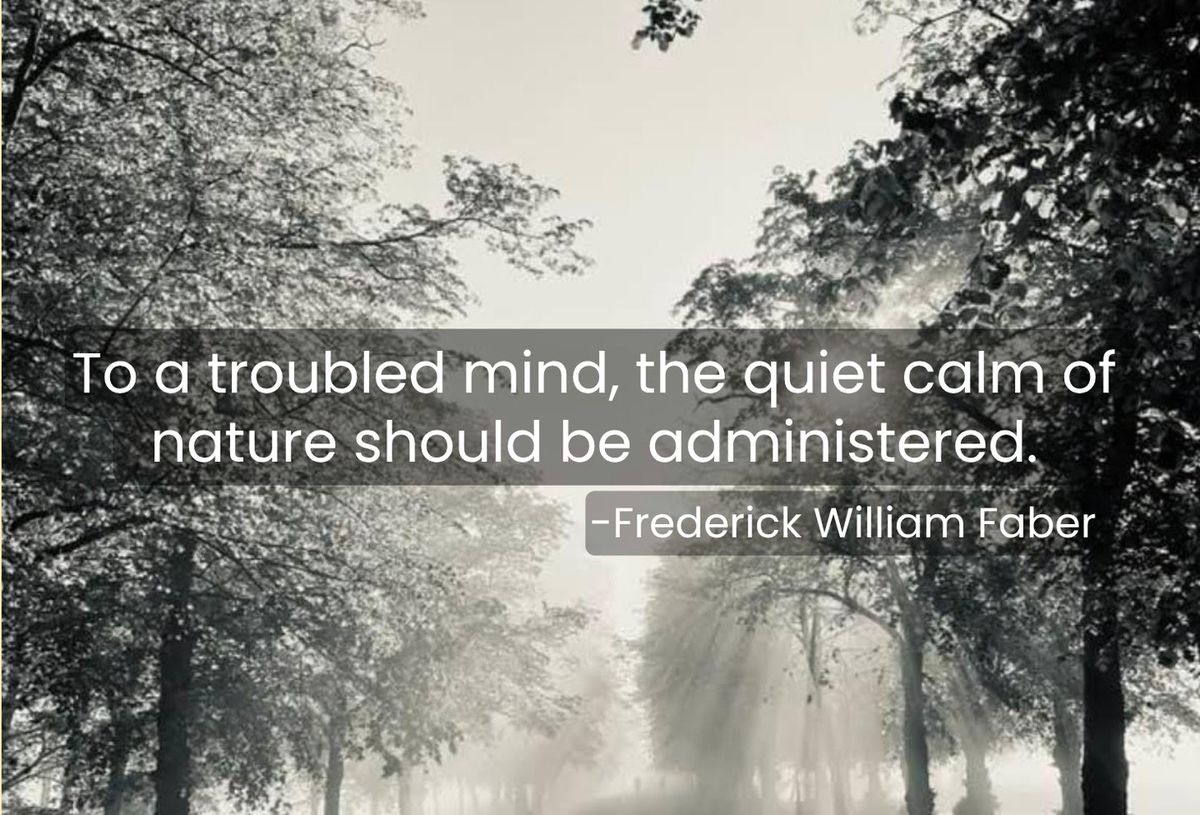
Card front: a black and white misty avenue of trees. Text reads: To a troubled mind, the quiet calm of nature should be administered. Frederick William Faber.
Get outside£4.50

Inside

Faber wrote that in the 1800s and the science has since caught up: time among trees lowers stress hormones and quietens the mind. It's not soft. It's medicine that grows for free.

The research: a walk in green space reduces rumination — the brain's stuck loop — compared with the same walk in traffic (Bratman et al., 2015).

One small thing: find the nearest tree. Stand under it for a bit.

£4.50
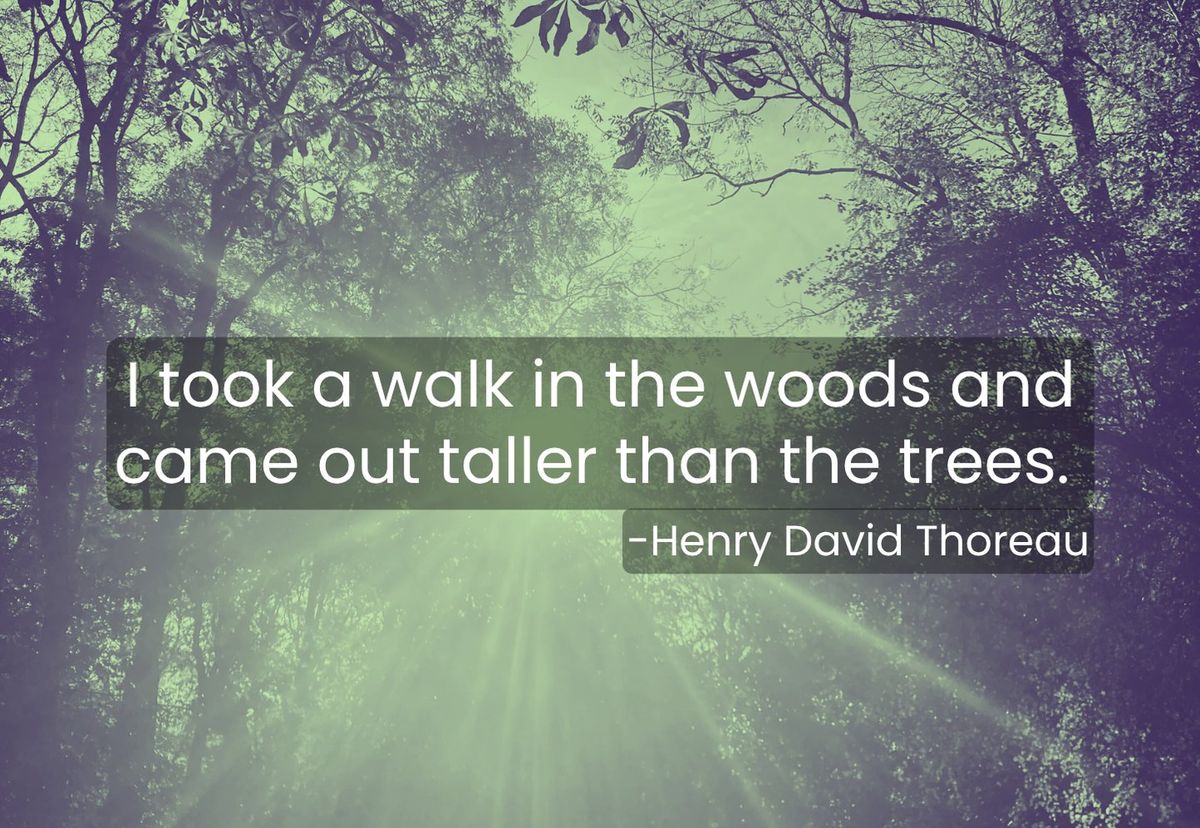
Card front: sunlight through woodland. Text reads: I took a walk in the woods and came out taller than the trees. Henry David Thoreau.
Get outside£4.50

Inside

You don't have to go far. A park. A towpath. The scrappy bit of green behind the car park. Walk in it for twenty minutes and notice how you come out slightly taller.

The research: a twenty-minute "nature pill" measurably lowers cortisol, the stress hormone (Hunter et al., 2019).

One small thing: twenty minutes, no phone, somewhere green.

£4.50

A small selection. More written every month — with, not about, the people they're for. Be first to know when we launch

What makes them different

Written by people who practise it. Not people who quote it.

  • Front

    Says the true thing

    No glitter, no "hang in there". A real photograph and the words you'd say if you were brave enough — so you don't have to be.

  • Inside

    A note from someone who's been there

    Written, not ghostwritten, by people with lived experience of mental ill health — grounded in research they've actually tested on themselves.

  • Back

    The source, one small thing, and who to call

    Where the insight comes from, one doable thing for today, and the number to ring if today is heavier than a card.

LivedEvery writer has been the one in four. Nobody is guessing.
ResearchedEvery inside line rests on published mental-health research, cited on the back.
PractisedWe only print what we've tried ourselves on a bad Tuesday and found it helped.

Ok(ish) at work

One in four of your team, too.

Managers want to say something when a colleague is struggling. Most say nothing, because they're scared of getting it wrong. Ok(ish) team packs give them the words — and give HR a wellbeing gesture that doesn't arrive as a webinar.

  • Team packs of 25 or 50 — mixed, or themed around winter, return-to-work or burnout.
  • Co-branded cards for wellbeing weeks, with your logo on the back and our words inside.
  • Lived-experience talks for your people, from people who've been there — not a slide deck about resilience.
Talk to us about packs
Will Farquhar, founder of Ok(ish), smiling in a café
Will FarquharFounder, Ok(ish)

Our story

"I was the one in four."

— Will Farquhar, founder

I know what it's like to open a card that says "you've got this" on a day when you very much haven't. It's meant kindly. It lands like a closed door.

Ok(ish) started with one question: what would I have wanted to find on the doormat? Something honest. Something written by someone who knew. Something that didn't ask me to perform being fine.

So that's what we make — with writers, researchers and voices who have lived experience of mental ill health, not just opinions about it. We break stigma, build community, and make support tangible. One card at a time.

Written with, not aboutOur cards are co-written with people who've been the one in four — and shared by influencers who talk about it openly. If that's you and you write, we'd like to hear from you.

Invest in Ok(ish)

A new category, one card at a time.

Ok(ish) is set to revolutionise the greeting card industry with a new wellbeing category. Our cards use mental-health research written by sufferers who practise the insights rather than quote them.

Through B2C, B2B and influencers with lived experience, Ok(ish) targets the £5m greeting card gap. We break stigma, build community, and make support tangible.

Invest in Ok(ish) and change how we care for each other — because real mental-health support can now arrive in the post. — Will Farquhar, founder
First class1 in 4people in the UK face mental ill health every day
The gap£5mgreeting card gap Ok(ish) is built to fill
Three routes3routes to market — B2C, B2B, and influencers with lived experience